ANA’s concept renders are not licensed to us: their terms forbid reproduction without prior consent, so they appear as labelled placeholders with links to ANA. The photographs of the site and related infrastructure are freely licensed (public domain or Creative Commons) and each carries its author, licence and source. The infographics are our own, generated from the records. If you hold rights to relevant images and can license them, contact us.
Images appear only when the observatory owns them, they are in the public domain, or the rights holder has granted permission. Each one carries its full credit and licence. Everything else is shown as a labelled placeholder with a link to where the image can be seen legally.
Concept images of the proposed airport and earlier proposals
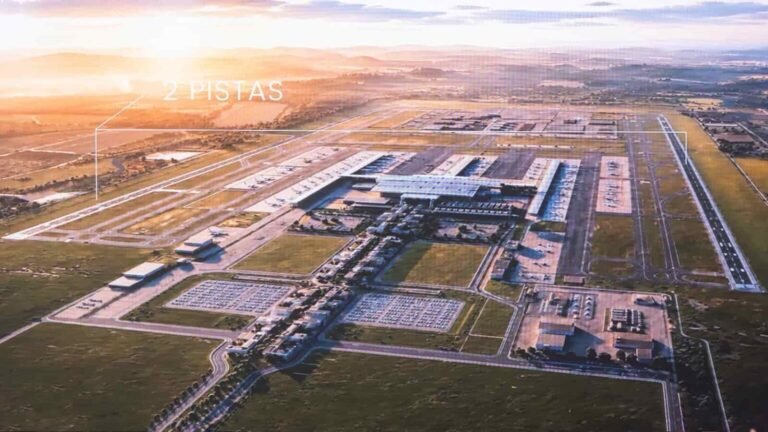
Concept CGI — not an approved design Luís de Camões concept (2026)
ANA concept image: aerial view of Luís de Camões Airport (July 2026)
ANA's aerial concept image: the two initial runways, the central terminal and its piers, with car parks and access roads in the foreground. A preliminary design, still under Government review; the text on the image is ANA's.
“Aeroporto Luís de Camões — vista aérea”, © ANA – Aeroportos de Portugal, used with permission, via copy published by Pontos pra Voar. Converted to JPEG.
- Editorial placeholderNot cleared — do not publish
Concept CGI — not an approved design Alcochete concept 2008–2010 (superseded)
Earlier Alcochete airport concepts (2008–2010)
Images of the earlier Alcochete studies still circulate online. They do not show the 2026 design and must not be presented as current.
Image, © Not established, Unknown.
- Editorial placeholderNot cleared — do not publish
Concept CGI — not an approved design Montijo proposal (superseded)
Montijo complementary-airport proposal images
Images of the superseded Montijo proposal. Historical only.
Image, © Not established, Unknown.
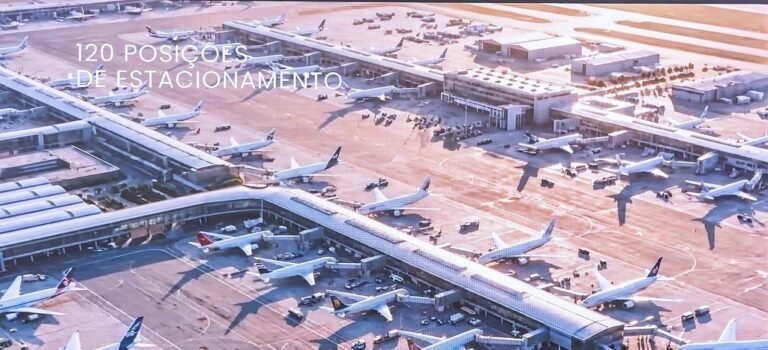
Concept CGI — not an approved design Luís de Camões concept (2026)
ANA concept image: piers and aircraft stands
Piers with contact boarding bridges and remote stands. ANA's proposal has 120 aircraft stands (the text is ANA's). Airline colours in the image are illustrative and imply no airline commitment.
“Aeroporto Luís de Camões — posições de estacionamento”, © ANA – Aeroportos de Portugal, used with permission, via copy published by Pontos pra Voar. Converted to JPEG.
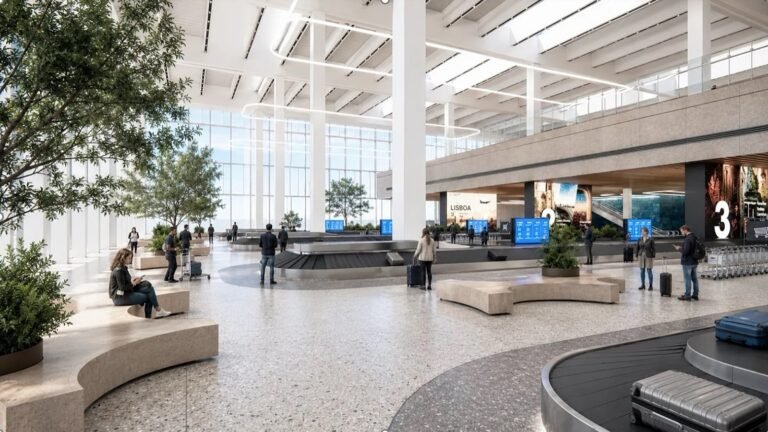
Concept CGI — not an approved design Luís de Camões concept (2026)
ANA concept image: arrivals hall
Baggage reclaim in ANA's concept for the terminal: high roof lights, trees and stone benches. Interior finishes are not fixed at this stage.
“Aeroporto Luís de Camões — sala de chegadas”, © ANA – Aeroportos de Portugal, used with permission, via copy published by Euronews. Converted to JPEG, resized to 1,600 px wide.

Concept CGI — not an approved design Luís de Camões concept (2026)
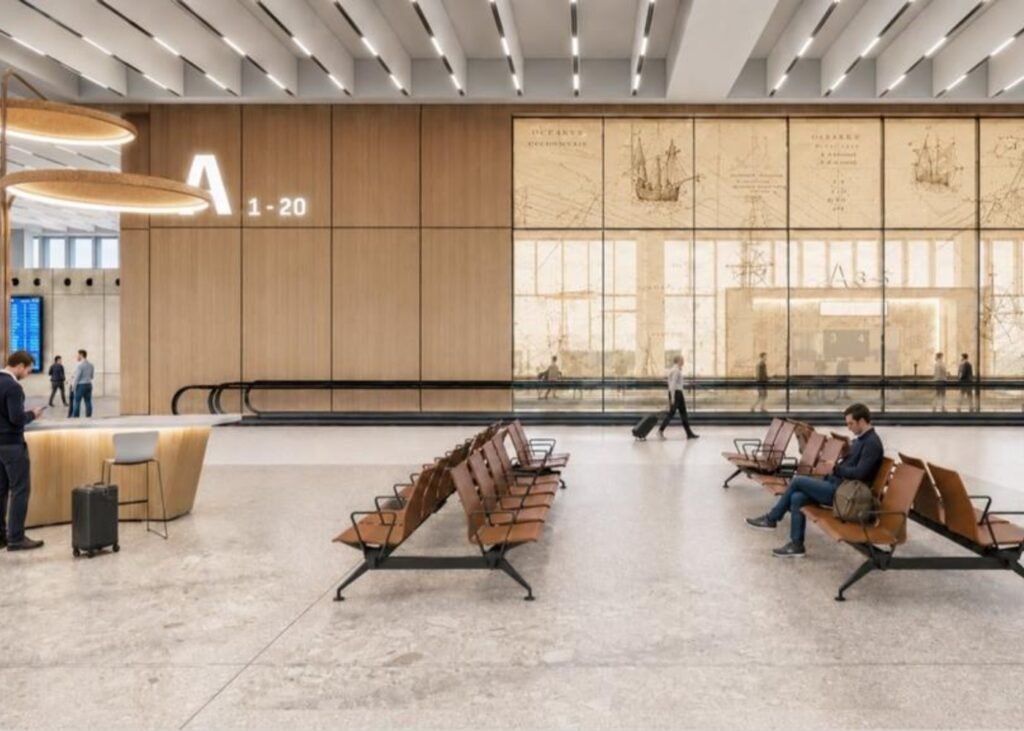
A boarding area in ANA's concept, with wood panelling and old maps of the Portuguese discoveries as decoration.
“Aeroporto Luís de Camões — zona de embarque”, © ANA – Aeroportos de Portugal, used with permission, via copy published by E-Konomista. Converted to JPEG.
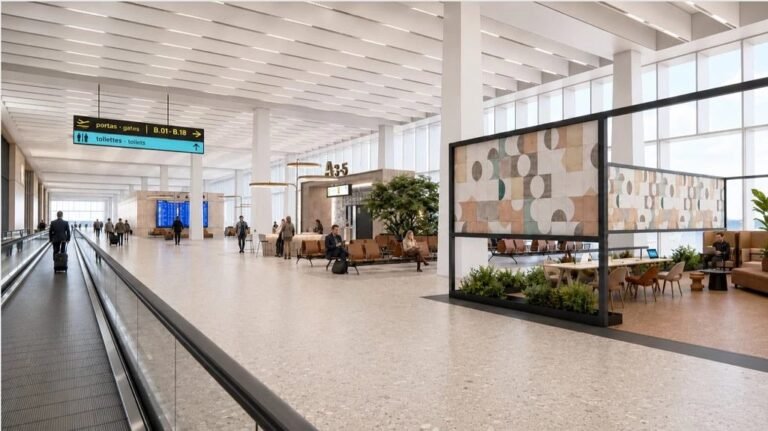
Concept CGI — not an approved design Luís de Camões concept (2026)
ANA concept image: departures pier
A long departures pier with moving walkways and seating areas decorated with tile patterns, in ANA's concept.
“Aeroporto Luís de Camões — cais de embarque”, © ANA – Aeroportos de Portugal, used with permission, via copy published by Pontos pra Voar. Converted to JPEG.
Original infographics
The July 2026 design at a glance
Proposed by ANA in July 2026 — under Government review since 28 September 2026. Not approved.
- 2runways in the initial phaseStatus: Officially proposed
- about 500,000 m²single passenger terminalStatus: Officially proposed
- 64boarding gatesStatus: Officially proposed
- 72contact boarding bridgesStatus: Officially proposed
- 120aircraft stands (VINCI release)Status: Officially proposed
- 56 millionpassengers a year at openingStatus: Officially proposed
- up to 85 millionpassengers a year, long termStatus: Target / forecast
- 7,900–8,900 € millioninvestment estimate, 2024 pricesStatus: Officially proposed
- from 2035opening target, after tests and certificationStatus: Target / forecast
Each number links to its record, sources and version history. Data as of 18 October 2026, from the linked records. Graphic: Luís de Camões Airport Observatory (original work). The approval path: done, under review, still to come
- 14 May 2024Site chosen by Council of Ministers resolutionDone
- 16 July 2025Interim report 1: stakeholder consultationDone
- 20 March 2026Placement at the eastern end validatedDone
- 16 July 2026Technical report deliveredDone
- 31 July 2026Environmental impact study delivered to APADone
- 28 September 2026Government questions the design (not an acceptance)Under review
- 16 January 2027Interim report 4: financial report dueScheduled
- by 16 January 2028Complete application dueScheduled
- —Public consultation and environmental decision (APA)No date set
- —Acceptance of the complete application under the concessionNo date set
- 2029Construction (target 2029–2033)Target only
- from 2035Opening (target: from 2035)Target only
Scheduled dates and targets are not guarantees. Data as of 18 October 2026, from the linked records. Graphic: Luís de Camões Airport Observatory (original work). How the opening date moved
20282029203020312032203320342035203620372038Reported, unverifiedopening- May 2024 plan — first runway: 2030
- May 2024 plan — second runway: 2031
- July 2026 schedule — construction: 2029–2033
- July 2026 schedule — rail link: 2034
- July 2026 schedule — opening: from 2035
- Reported, unverified — opening: 2037
A revised target is a change, not by itself evidence of failure. The 2024 dates were for runways; the 2026 dates are for a certified, open airport. Data as of 18 October 2026, from the linked records. Graphic: Luís de Camões Airport Observatory (original work). Why the two cost figures cannot be compared
May 2024
- Covers
- Two runways, in the Government’s strategic analysis
- Price base
- not stated
July 2026
- Covers
- The airport project in ANA’s technical report
- Price base
- 2024 prices
- Different scope: runways only versus an airport project.
- Different price base: not stated versus 2024 prices.
- Different stage: strategic analysis versus preliminary design.
Subtracting one from the other would not measure a cost increase. Data as of 18 October 2026, from the linked records. Graphic: Luís de Camões Airport Observatory (original work). What the €7.9–8.9 billion estimate covers — as far as we know
Stated
- 7,900–8,900 € million — the airport project in ANA’s technical report, at 2024 prices
Not stated whether included
- Land and expropriations
- Relocating the military firing range
- The airport rail link
- The Third Tagus Crossing
- Regional road schemes
- Financing costs and interest
- Inflation after 2024
- Contingency
Separate figures on record
- up to 4.5 € million — demilitarisation works authorised, plus VAT
- about 7,000 € million — debt ANA plans to raise (financing, not an extra cost)
We do not add these figures together: they have different scopes and price bases. Data as of 18 October 2026, from the linked records. Graphic: Luís de Camões Airport Observatory (original work). Proposed access links (schematic)
Schematic, not to scale. No alignment has been approved or published; nothing here shows a route.
- Central Lisbon / Chelas
- Third Tagus Crossing — proposed road-rail bridge
- Barreiro / Lavradio
- Dedicated rail link (proposed) · about 20 minutes · target 2034
- Airport station (4 tracks, 3 platforms, proposed)
Proposed road schemes · 250 km new · more than 50 km upgraded
- EN4 · EN10 · EN119 → airport links
- A33 → A12 / A13
- IC13: airport – Ponte de Sor – Alter do Chão
- EN118 dualling · EN119 upgrade
Rail, bridge and roads are separate projects with their own decisions and dates. Data as of 18 October 2026, from the linked records. Graphic: Luís de Camões Airport Observatory (original work). Passenger capacity: different scenarios, not one forecast
Current airport (2024 projection)
New airport — July 2026 design
New airport — 2024 strategic scenario (up to four runways)
Do not combine the panels: they come from different analyses with different assumptions. Data as of 18 October 2026, from the linked records. Graphic: Luís de Camões Airport Observatory (original work). Lisbon airport passengers, and the capacity planned
Million passengers a year
published figure * derived from published growth rates projection or design capacity, not traffic
Traffic: INE preliminary data (2021, 2023, 2024) and VINCI Airports (2025). Capacity is what the design is meant to handle, not a traffic forecast. Data as of 18 October 2026, from the linked records. Graphic: Luís de Camões Airport Observatory (original work). The 2024 two-runway figure, split by runway
- First runway3,231 € million
- Second runway2,874 € million
Total for two runways: 6,105 € million Status: Historical / superseded
From the Government’s May 2024 strategic analysis. Price base not stated; superseded by the July 2026 estimate, which has a different scope. Data as of 18 October 2026, from the linked records. Graphic: Luís de Camões Airport Observatory (original work). Estimate and planned debt
- Debt is one way of paying for the project, not an extra cost.
- How the rest would be funded (equity, airport charges, concession terms) is not set out in the public documents.
- The debt figure has no stated price base, so the two bars are a rough guide to scale only.
The lighter part of the first bar is the uncertainty range of the estimate. Data as of 18 October 2026, from the linked records. Graphic: Luís de Camões Airport Observatory (original work). Getting to the airport: the proposed numbers
- about 20 minutesby train to central Lisbon (proposed)Status: Officially proposed
- 20 million passengers a yearrail passengers a year (estimate)Status: Target / forecast
- 250 kmof new roads proposedStatus: Officially proposed
- more than 50 kmof existing roads upgradedStatus: Officially proposed
Road traffic expected each day · 65,000 light vehicles · about 2,000 heavy vehicles
Each icon = 1,000 vehicles a day. Red: heavy goods vehicles.
Estimates from the July 2026 proposals. Rail, the Third Tagus Crossing and the roads each need their own decisions. Data as of 18 October 2026, from the linked records. Graphic: Luís de Camões Airport Observatory (original work). The environmental impact study in numbers
- about 5,000pages in the environmental impact study
- more than 60specialists who worked on it, per ANA
- 31 July 2026delivered to the Portuguese Environment Agency (APA)
Printed single-sided, the study would make a pile about 50 cm high (at 0.1 mm a sheet).
- Study delivered
- APA checks it is complete
- Public consultation
- Environmental decision (DIA)
Size is not quality: what matters is what the study finds and how APA and the public assess it. Data as of 18 October 2026, from the linked records. Graphic: Luís de Camões Airport Observatory (original work). The replacement firing range, to scale
Lisbon municipality · about 10,000 ha (100 km²)Squares drawn to the same scale; areas only, not shapes or locations. Lisbon municipality area: DGT official administrative map (CAOP). Data as of 18 October 2026, from the linked records. Graphic: Luís de Camões Airport Observatory (original work). How big is a 500,000 m² terminal?
about 500,000 m² of terminal floor area ≈ 70 football pitches of 105 × 68 m. Status: Officially proposed
For a sense of scale only: floor area may be spread over several levels, so the building’s footprint will be smaller. Data as of 18 October 2026, from the linked records. Graphic: Luís de Camões Airport Observatory (original work).
Illustrations
Illustration — not to scale, not the airport design
Illustration: the Tagus estuary
Lisbon on its hills, the long bridges across the estuary and the flat east bank where the new airport is planned.
Illustration: Luís de Camões Airport Observatory (original work).
Illustration — not to scale, not the airport design
Illustration: montado and pine plain
The Campo de Tiro de Alcochete lies in sandy country of cork oaks and umbrella pines.
Illustration: Luís de Camões Airport Observatory (original work).
Illustration — not to scale, not the airport design
Illustration: a passenger terminal
A generic terminal with a jet bridge. It is not the Luís de Camões design, whose images are ANA's.
Illustration: Luís de Camões Airport Observatory (original work).
Illustration — not to scale, not the airport design
An aircraft on final approach to a lit runway.
Illustration: Luís de Camões Airport Observatory (original work).
Illustration — not to scale, not the airport design
Illustration: a train across the marshes
A train on a viaduct over salt marsh. The airport rail link is proposed; no route has been approved.
Illustration: Luís de Camões Airport Observatory (original work).
Illustration — not to scale, not the airport design
Illustration: a bridge over the Tagus
A suspension bridge across the river. The Third Tagus Crossing is a separate, proposed project.
Illustration: Luís de Camões Airport Observatory (original work).
Illustration — not to scale, not the airport design
Illustration: roads and an overpass
Cars and lorries on a road and an overpass. The road schemes around the airport are proposals.
Illustration: Luís de Camões Airport Observatory (original work).
Illustration — not to scale, not the airport design
Illustration: costs and financing
Stacks of coins and a sealed report: the cost estimate, and how it would be paid, are still under review.
Illustration: Luís de Camões Airport Observatory (original work).
Illustration — not to scale, not the airport design
Illustration: birds of the estuary
Flamingos and egrets on the Tagus mudflats, one of Europe's most important wetlands for birds.
Illustration: Luís de Camões Airport Observatory (original work).
Illustration — not to scale, not the airport design
Low houses and a bell tower: the towns near the site, such as Benavente and Samora Correia.
Illustration: Luís de Camões Airport Observatory (original work).
Illustration — not to scale, not the airport design
Illustration: aircraft and airlines
Tail fins at an apron and an aircraft taking off. No airline is shown.
Illustration: Luís de Camões Airport Observatory (original work).
Illustration — not to scale, not the airport design
Illustration: fifty years of site studies
A schematic map with several candidate sites and one chosen. Pins are symbolic, not real locations.
Illustration: Luís de Camões Airport Observatory (original work).
Illustration — not to scale, not the airport design
Illustration: dates and deadlines
Steps done, the current step and the steps still to come.
Illustration: Luís de Camões Airport Observatory (original work).
Illustration — not to scale, not the airport design
Illustration: construction has not started
An empty plain with survey stakes. Construction is targeted to start in 2029, after the approvals.
Illustration: Luís de Camões Airport Observatory (original work).
Illustration — not to scale, not the airport design
Illustration: documents and approvals
Reports, a seal and a pen: the project advances by formal documents and decisions.
Illustration: Luís de Camões Airport Observatory (original work).
Photographs of the site and related infrastructure
- Editorial placeholderNot cleared — do not publish
Photographs of the Campo de Tiro de Alcochete
Wanted: landscape and aerial photographs of the site with documented rights. The register currently holds one public-domain photo of military training at the range (MED-023). Contributions are welcome.
Image, © Not established, Unknown.
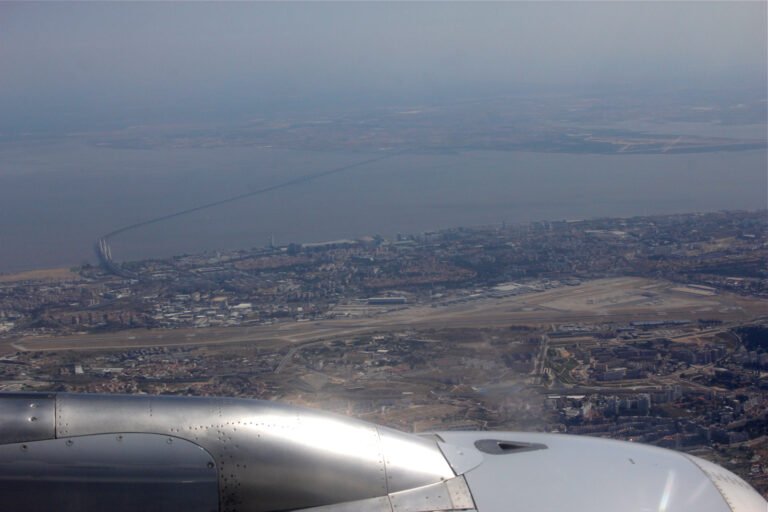
Humberto Delgado Airport and the Tagus from the air
Lisbon's current airport, hemmed in by the city, with the Vasco da Gama Bridge crossing the Tagus estuary behind it. The new airport is planned east of the estuary, beyond the far shore. September 2013.
“Lisboa Airport LIS aerial view September 2013 with Ponte Vasco Da Gama”, © Wiki-observer, CC BY-SA 3.0, via Wikimedia Commons. Resized to 1,600 px wide.
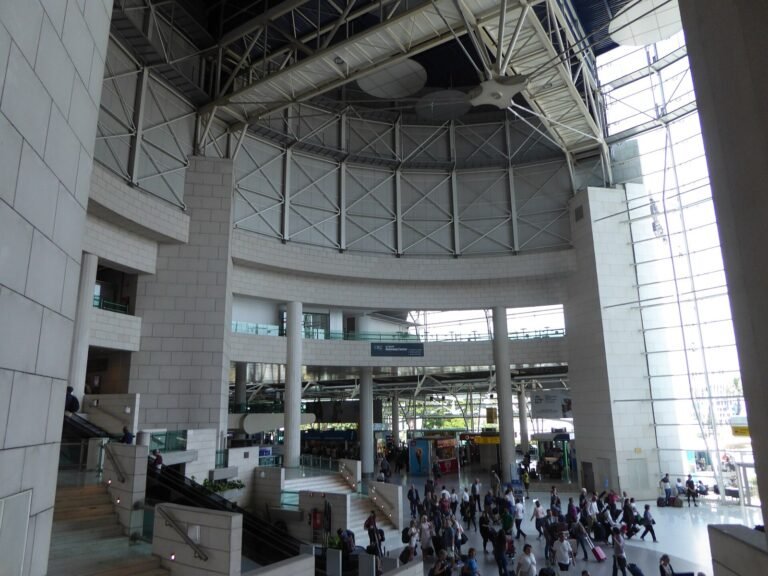
Terminal 1 at Humberto Delgado Airport
Terminal 1 of the current airport in May 2017. Under the 2024 decision, Humberto Delgado stays open, with capacity works, until the new airport operates.
“Lisbon Portela Airport Terminal 1, May 2017 (01)”, © Ardfern, CC BY-SA 4.0, via Wikimedia Commons. Resized to 1,600 px wide.
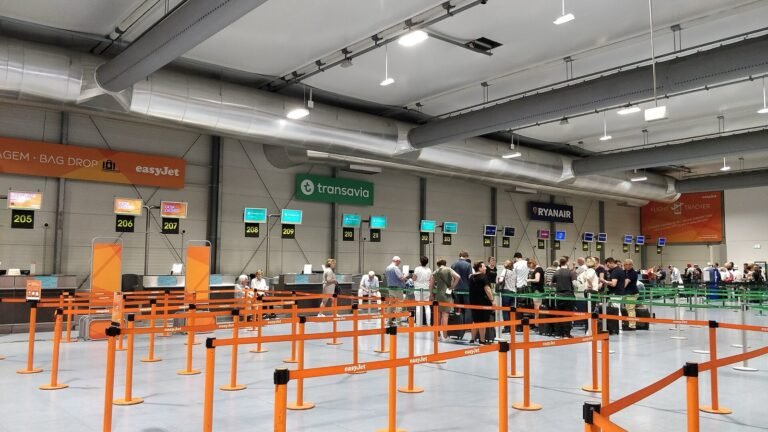
Terminal 2 at Humberto Delgado Airport
Terminal 2 of the current airport in May 2019. ANA has since extended its Schengen boarding area as part of transitional works.
“Lisbon Airport, Terminal 2 (1)”, © Jcornelius, CC BY-SA 4.0, via Wikimedia Commons. Resized to 1,600 px wide.
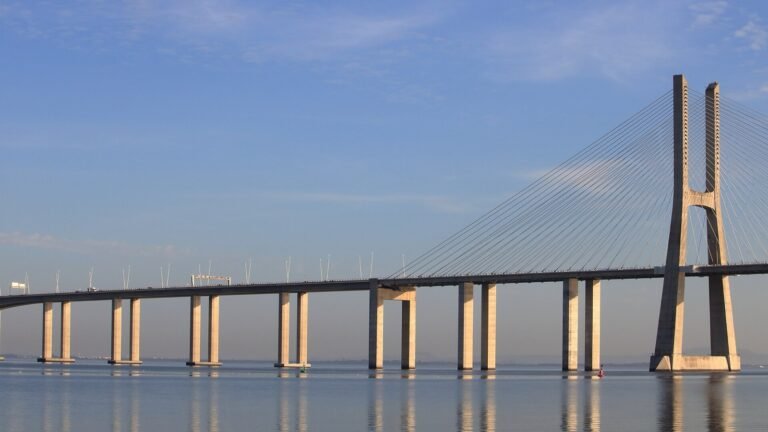
Vasco da Gama Bridge (A12) across the Tagus
The Vasco da Gama Bridge carries the A12 motorway from Lisbon to the south bank, towards Montijo and Alcochete. The proposed road schemes include connecting the A33 to the A12. October 2019.
“Ponte Vasco da Gama from Parque Tejo”, © André B. Matos, CC BY-SA 4.0, via Wikimedia Commons. Resized to 1,600 px wide.
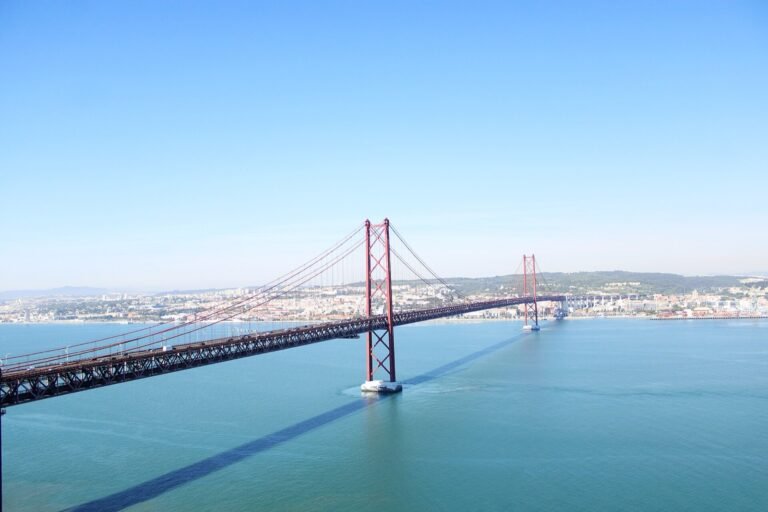
25 de Abril Bridge — Lisbon’s existing road-rail crossing
The 25 de Abril Bridge carries both road and rail across the Tagus. The proposed Third Tagus Crossing (Chelas–Barreiro) would be a second road-rail bridge, further upstream. October 2022.
“Ponte 25 de Abril, vista de Almada”, © Próxima Etapa, CC BY-SA 4.0, via Wikimedia Commons. Resized to 1,600 px wide.
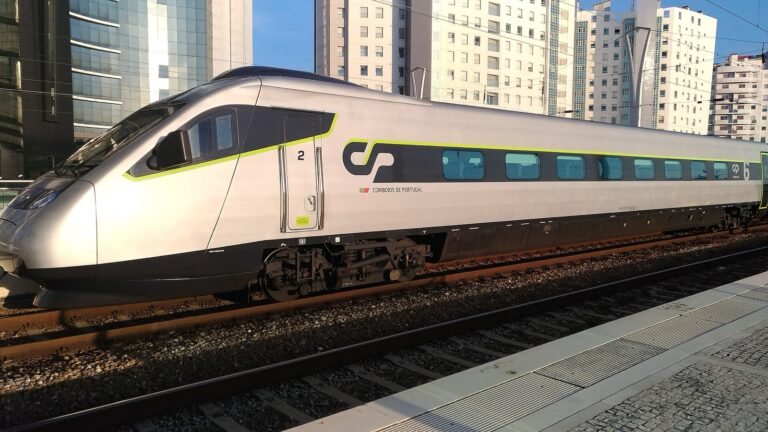
The tilting Alfa Pendular, Portugal's current long-distance express train, in its 2017 livery. The planned airport station would serve conventional and high-speed services; no rolling stock has been announced for the airport link.
“Alfa Pendular New Livery”, author: LuisFerreira4x4, CC0, via Wikimedia Commons. Resized to 1,600 px wide.
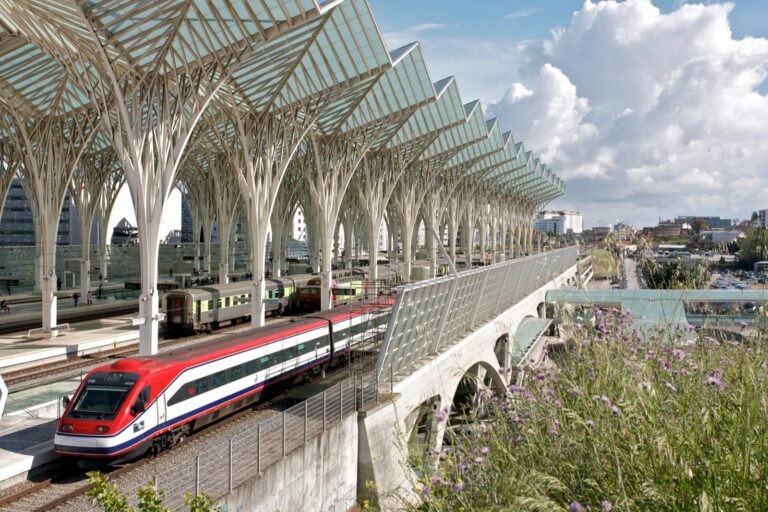
An Alfa Pendular at Lisboa Oriente, the station where the Lisbon–Porto high-speed line is planned to end. April 2011.
“Alfa Pendular 127, Gare do Oriente, 2011.04.21”, © Nuno Morão, CC BY-SA 2.0, via Wikimedia Commons. Resized to 1,600 px wide.
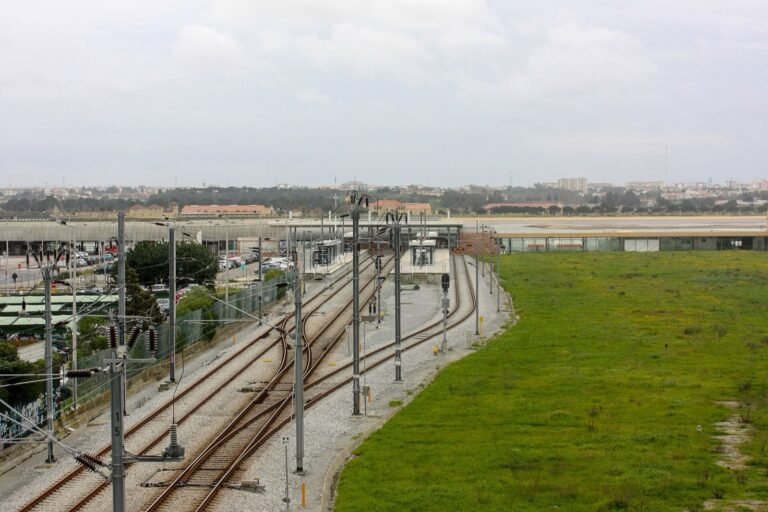
Barreiro station on the south bank, at the southern end of the proposed Chelas–Barreiro crossing. January 2020.
“Estação Ferroviária do Barreiro, panorama. 01-20 (02)”, © Rúdisicyon, CC BY-SA 4.0, via Wikimedia Commons. Resized to 1,600 px wide.
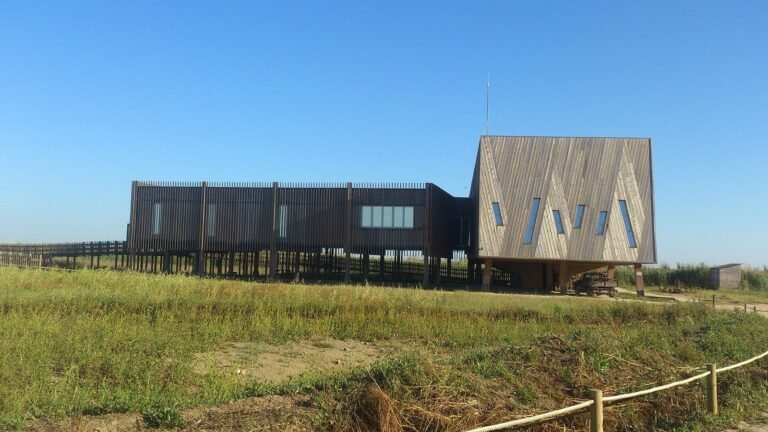
Tagus estuary: EVOA bird observation centre
The EVOA bird-watching centre in the Tagus estuary Natura 2000 site. Effects on ecology are among the themes of the airport's environmental impact study. May 2015.
“Rede Natura 2000 – Sítio do Estuário do Tejo 09”, © Joao 1968, CC BY-SA 3.0, via Wikimedia Commons. Resized to 1,600 px wide.
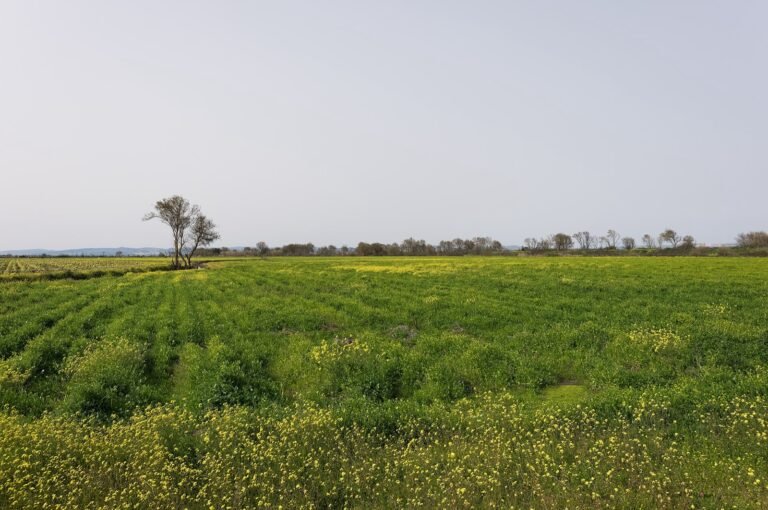
Lezíria farmland near Benavente
Flat farmland of the Tagus lezíria near Benavente, the municipality where most of the firing range — and the future airport — lies. February 2017.
“Lezíria fields near Benavente, Portugal (PPL1-Corrected) julesvernex2”, © Jules Verne Times Two, CC BY-SA 4.0, via Wikimedia Commons. Resized to 1,600 px wide.
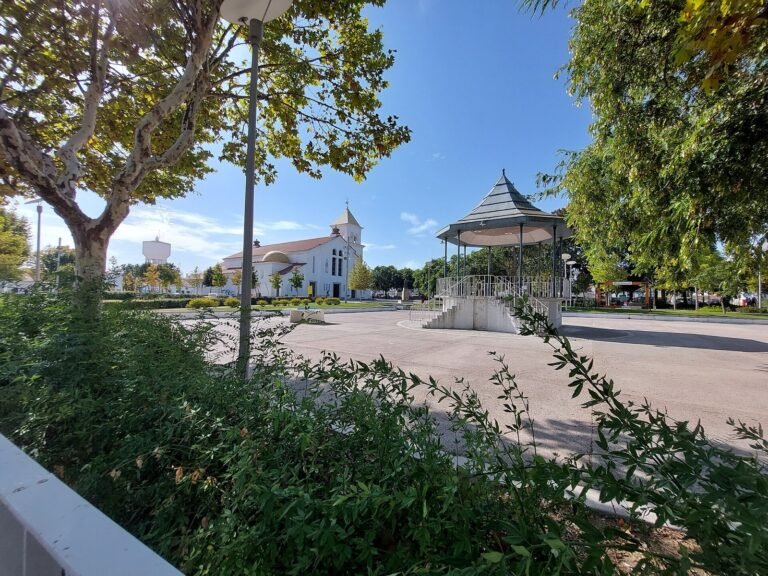
The bandstand and parish church in Benavente, the seat of the municipality listed in the airport's environmental assessment. October 2023.
“Enquadramento do Coreto de Benavente em relação à Igreja Paroquial de Benavente”, © Threeohsix, CC BY-SA 4.0, via Wikimedia Commons. Resized to 1,600 px wide.
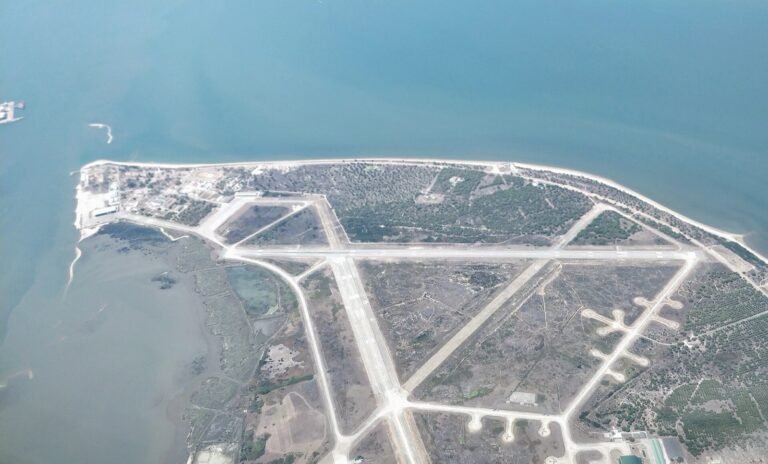
Montijo proposal (superseded)
Air Base No. 6 at Montijo, site of the earlier, abandoned proposal for a complementary civil airport. August 2019.
“Montijo Air Base 2019”, © Jcornelius, CC BY-SA 4.0, via Wikimedia Commons. Resized to 1,600 px wide.
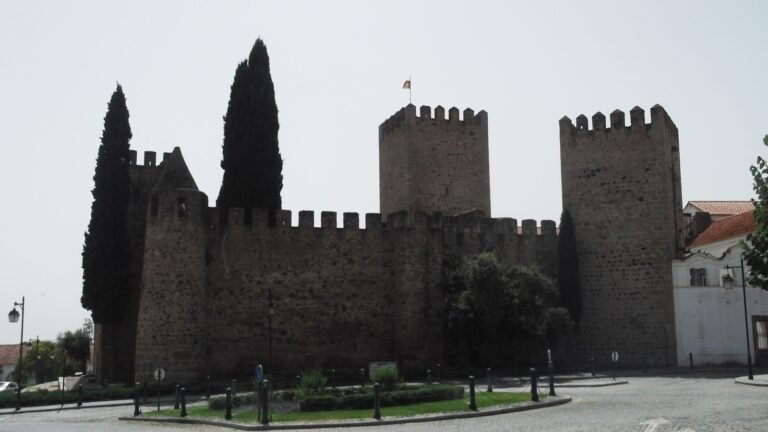
Alter do Chão castle. The municipality was announced in March 2026 as the location of the replacement military firing range. August 2018.
“Castelo de Alter do Chão 2018-08-06”, © RickMorais, CC BY-SA 4.0, via Wikimedia Commons. Resized to 1,600 px wide.

Training at the Campo de Tiro de Alcochete
A Portuguese Marine during a bilateral exercise at the Campo de Tiro de Alcochete on 14 January 2020 — the site's current military use, which must end before construction. U.S. Marine Corps photo.
“Wild Crocodile II (6051342)”, author: U.S. Marine Corps photo by Cpl. Kenny Gomez, Public domain, via Wikimedia Commons. Resized to 1,600 px wide.
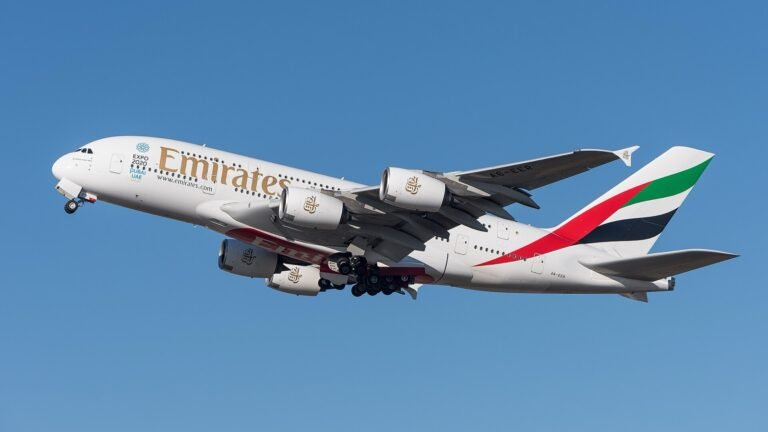
Airbus A380 — a Code F aircraft
An Airbus A380, the best-known Code F aircraft, at Munich in 2015. In September 2026 the Government asked ANA to demonstrate that the new airport's runways and taxiways are fully compatible with Code F aircraft. Photo not taken in Portugal.
“Emirates Airbus A380-861 A6-EER MUC 2015 04”, © Julian Herzog, CC BY 4.0, via Wikimedia Commons. Resized to 1,600 px wide.
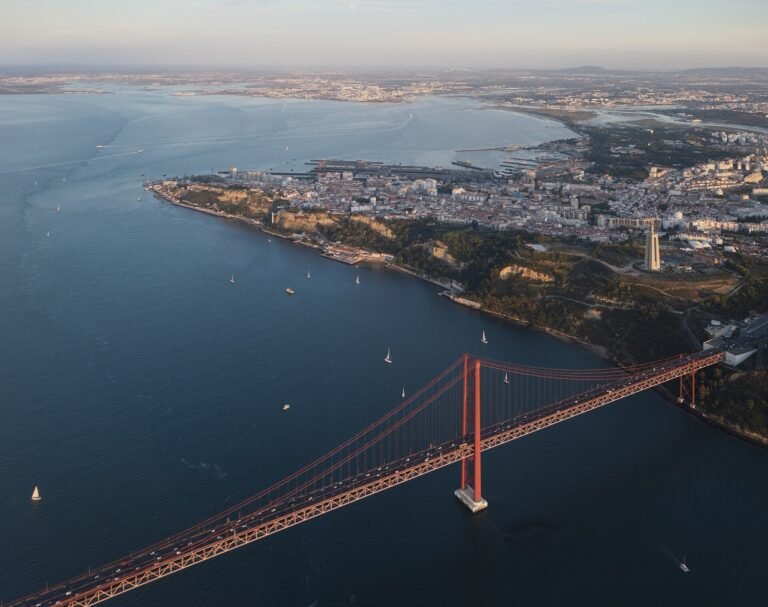
Aircraft landing at Humberto Delgado fly low over the city — here over the 25 de Abril Bridge. The Government cited Lisbon as the European capital with the second-highest number of residents exposed to aircraft noise. September 2023.
“Ponte 25 de Abril seen from a plane on the final approach to the Lisbon airport, Lisbon, Portugal julesvernex2”, © Jules Verne Times Two, CC BY-SA 4.0, via Wikimedia Commons. Resized to 1,600 px wide.
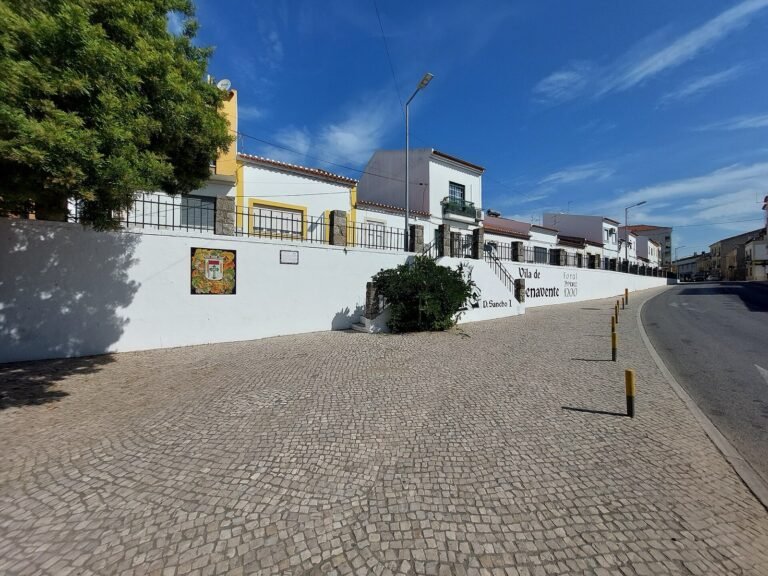
The EN118 national road passing houses in Benavente. The July 2026 road plan proposes dualling the EN118; where and how has not been published. October 2023.
“Casario próximo da Fonte de Santo António junto à Estrada Nacional 118 em Benavente”, © Threeohsix, CC BY-SA 4.0, via Wikimedia Commons. Resized to 1,600 px wide.


