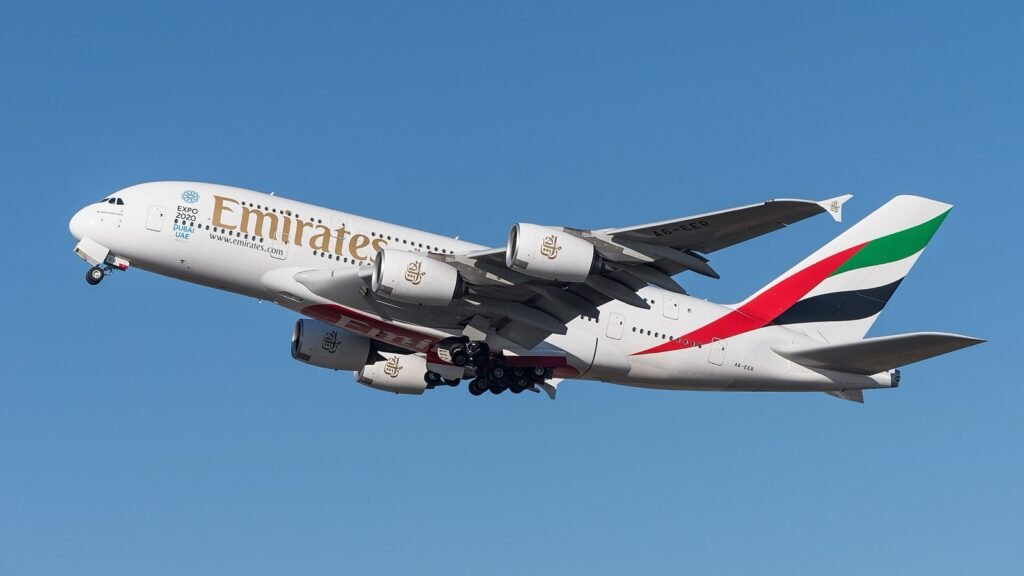

Airports are designed around a reference code that sets the size of the aircraft they can handle. Code F is the largest category, for the aircraft with the widest wingspans. An airfield built for it needs wider runways and taxiways, more separation between parallel taxiways and larger stands.
Illustration — not to scale, not the airport design
An aircraft on final approach to a lit runway.
Illustration: Luís de Camões Airport Observatory (original work).
Lisbon airport passengers, and the capacity planned
Million passengers a year
published figure * derived from published growth rates projection or design capacity, not traffic
Why it is in the letter
On 28 September 2026 the Government listed, among the airside matters needing more demonstration, ‘the configuration of the runways and taxiway network and its full compatibility with Code F aircraft, capacity and operational flexibility’. It did not say that the design fails the standard; it said ANA has not yet shown that it meets it.
Passenger capacity: different scenarios, not one forecast
Current airport (2024 projection)
New airport — July 2026 design
New airport — 2024 strategic scenario (up to four runways)
The specifications behind it
The concession contract sets minimum specifications for the new airport. In 2025 the Government accepted that some were out of date. Among ANA’s nine proposed changes were openness to a shorter maximum runway length and wider runway separation to allow triple independent operations — choices that interact with aircraft size.
What we do not know
Runway lengths, widths, spacing and orientation have not been published in the sources we reviewed. Until they are, any map showing runways at Alcochete is a guess. Ours does not draw them.